%20copy.png)


What's Changing in Procurement Operating Models

Procurement organizations are under pressure to do more than execute purchase orders and negotiate price. Across industries, the function is shifting from a purely transactional, decentralized activity toward a center-led operating model that pairs category expertise with enterprise-wide visibility into spend, risk, and supplier performance.
A few shifts are showing up consistently in how procurement teams are structured and run.
Center-led governance. Rather than fully centralizing or leaving every business unit to buy independently, more organizations are adopting a hybrid model: a central team sets category strategy, negotiates enterprise agreements, and owns supplier governance, while business units retain input on requirements and day-to-day supplier relationships. This balances consistency and control with the speed and context that local teams provide.
Spend visibility as a baseline, not a project. Spend analysis used to be a periodic exercise ahead of a sourcing event. Increasingly, it is an ongoing capability, informed by consolidated data across ERP, purchasing-card, and contract systems, that procurement leaders use to spot savings opportunities, flag maverick spend, and prioritize where to focus sourcing effort.
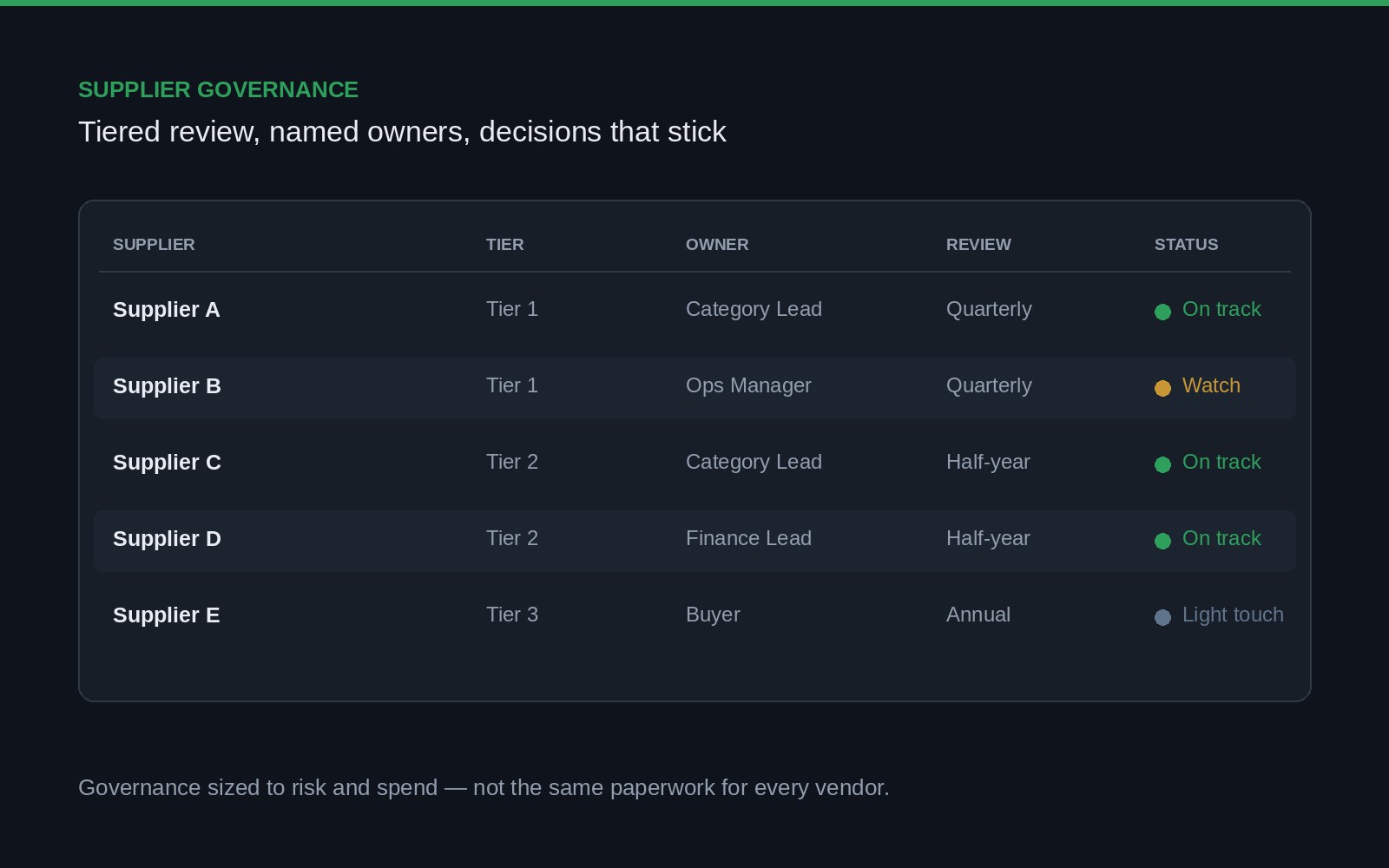
Supplier relationships managed as a portfolio. Instead of treating every supplier the same way, mature procurement operations segment their supplier base by risk and strategic importance, then apply different levels of oversight, from light-touch transactional management for low-risk categories to structured business reviews and contingency planning for critical suppliers.
Commercial and cross-functional skill sets. The procurement professional's toolkit has expanded beyond negotiation and contracting to include data analysis, stakeholder management, and enough fluency in operations and finance to make a credible business case for change.
For small and mid-sized organizations, adopting a fully built-out procurement function isn't always practical. The same principles, though, can be applied at a smaller scale: consolidating visibility into where money is going, being deliberate about which supplier relationships need active management, and building repeatable processes rather than handling every purchase as a one-off. That is the kind of practical, right-sized operating model work MPM Strategic Group focuses on with clients.

Discover similar content and expand your knowledge.

Contingent Workforce Programs: What to Get Right
A practical look at contingent workforce programs: the real difference between an MSP and a VMS, and the classification, rate-card, and offboarding details that are worth getting right from the start.
Building Supplier Governance That Actually Gets Used
Most supplier governance frameworks look fine on paper. Here's what separates the ones teams actually keep using from the ones that quietly stop after the first quarter.


.png)